

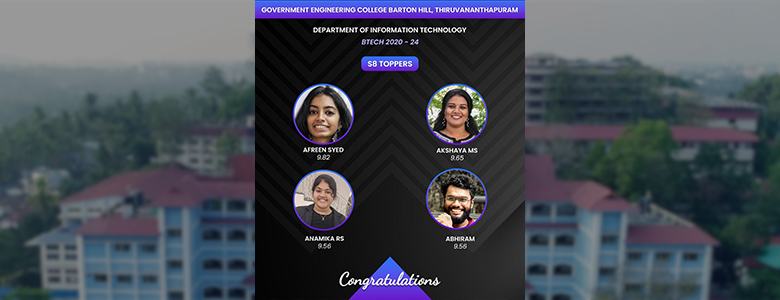


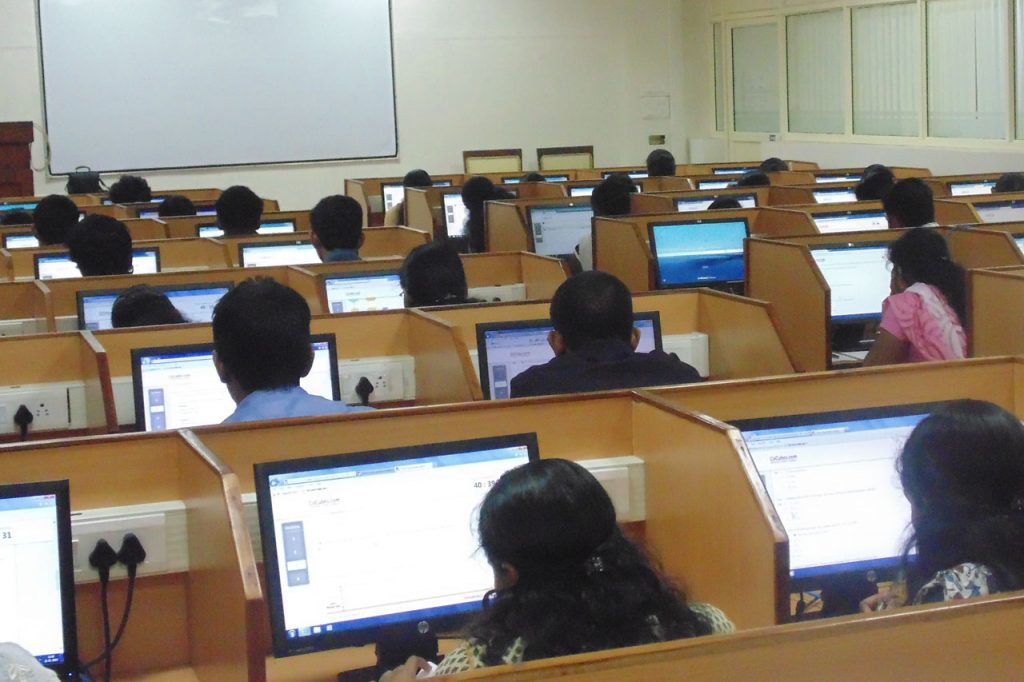

The Department of Information Technology at Government Engineering College, Barton Hill, Thiruvananthapuram, was established in 1999 with the vision of imparting quality education and promoting innovation in the rapidly evolving field of Information Technology. Over the years, the department has emerged as a centre of excellence, producing competent professionals equipped to address the challenges of the digital era.
The department offers a B.Tech. programme in Information Technology and two M.Tech. programmes in Network Engineering and Artificial Intelligence & Data Science. The curriculum is designed to provide a strong theoretical foundation complemented by practical learning, enabling students to excel in both industry and research.
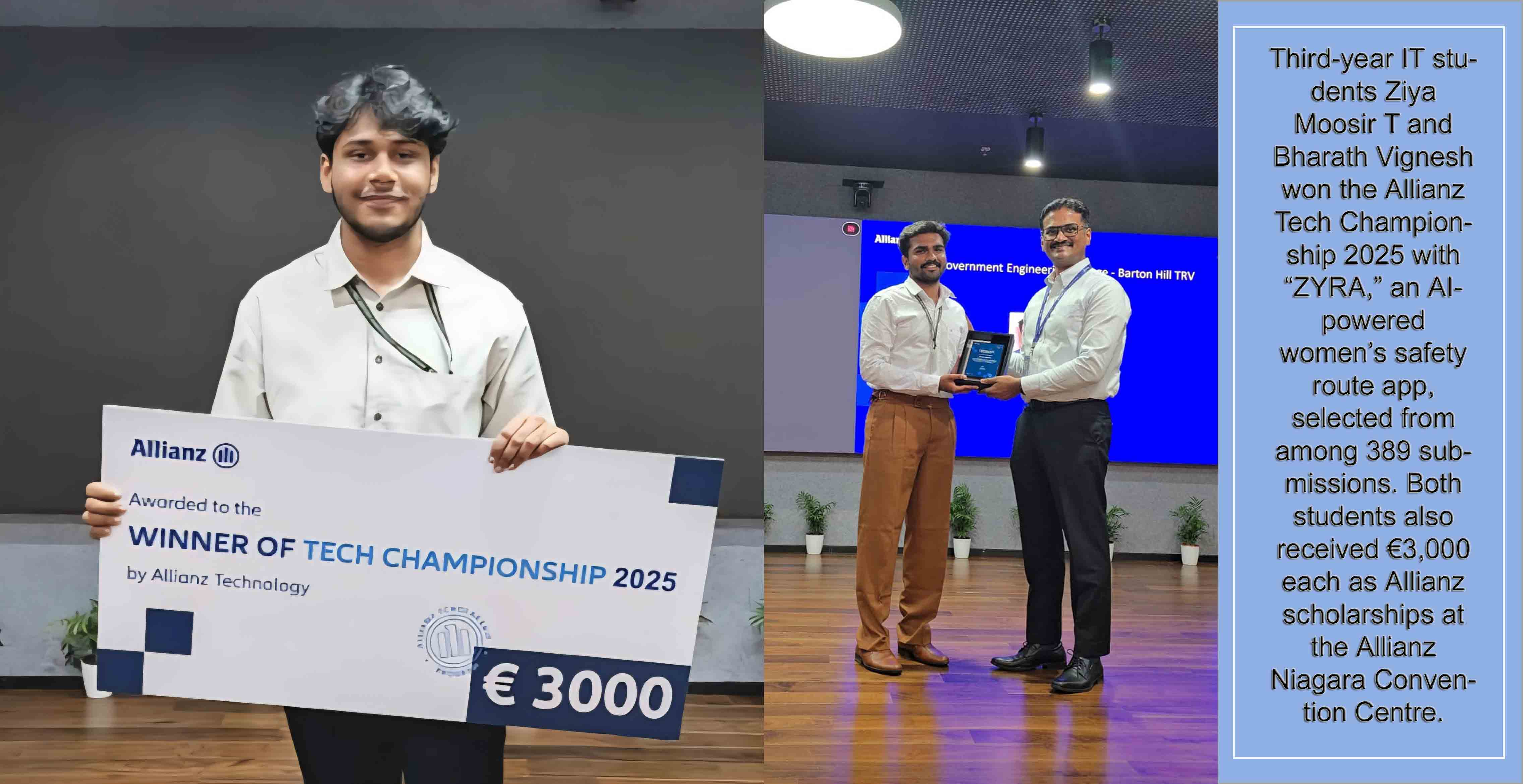
The department takes pride in its accomplished alumni, who hold distinguished positions in leading multinational corporations, government organizations, research institutions, and academic establishments across the globe. It also fosters a culture of innovation and entrepreneurship by encouraging students to develop creative solutions, pursue research, and actively participate in hackathons and startup initiatives.
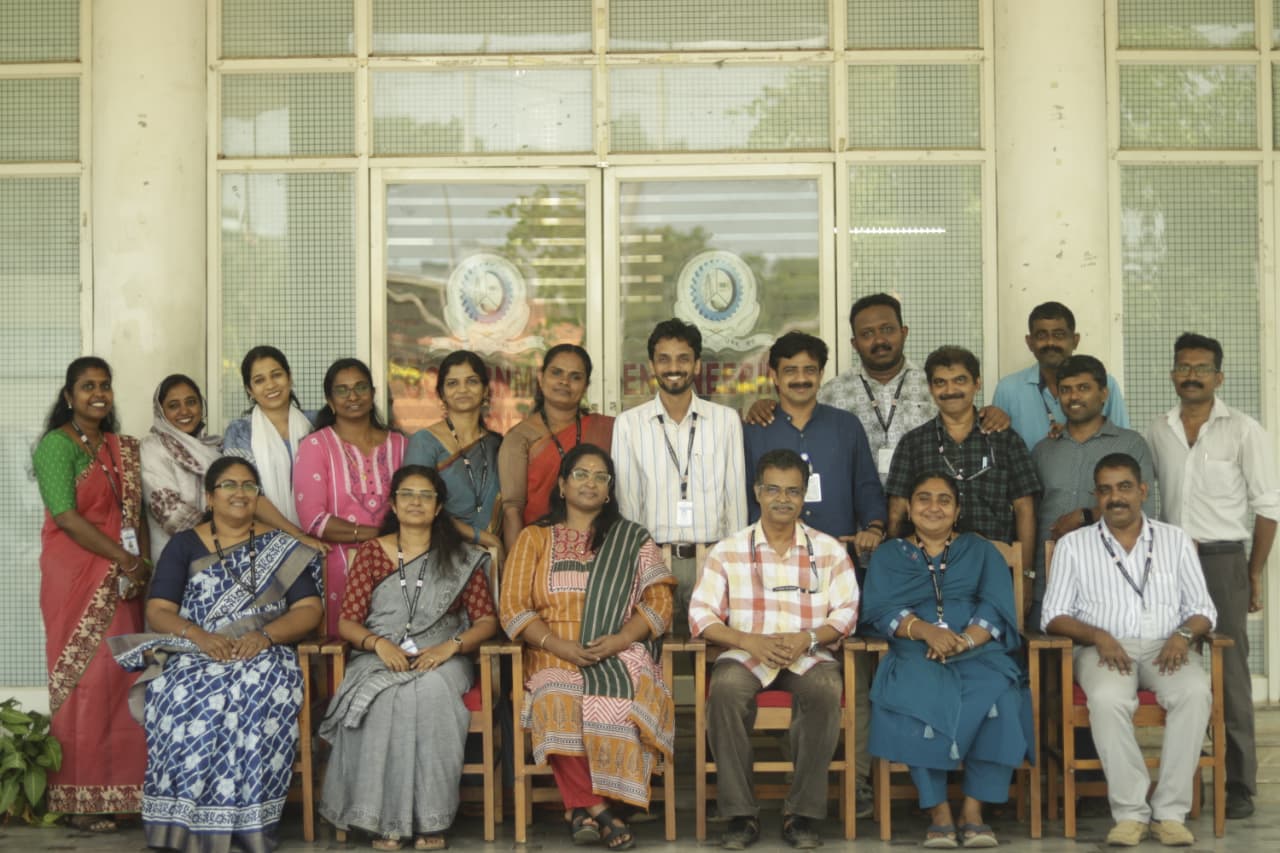
The department is supported by a team of highly qualified and dedicated faculty members who are actively engaged in teaching, research, consultancy, and professional development. To strengthen industry–academia collaboration, the department regularly organizes expert lectures, workshops, seminars, industrial visits, and collaborative research programmes. Faculty members mentor students in innovative projects and research activities, often in partnership with reputed industries and research organizations, thereby providing valuable exposure to real-world technological challenges.
VISIONTo be a centre of higher learning in Information Technology that imparts quality engineering education and fosters innovative research reaching out to the society.
MISSIONM1: Establish a conducive learning environment in the field of Information Technology.
M2: Mould IT professionals with ethical values to address the needs of the society.
M3: Collaborate with academic, industrial, and research organizations of repute.
The college now offers five full time B. Tech degree courses. The duration of the Under Graduate Programme is four years. As per the AICTE norms, the annual intake of each UG course is sixty.
PEO 1Achieve professional competency in the field of Information Technology to become successful IT solution providers and entrepreneurs.
PEO 2Acquire scientific and engineering knowledge to pursue higher education and research.
PEO 3Become professionals with effective interpersonal skills, leadership qualities and social concern.
Design, implement and manage efficient and secure networking solutions with state-of-the- art Information and Communication Technologies.
PSO 2Design and develop solutions for real world problems using suitable programming languages and appropriate platforms by following the best software engineering principles and methodologies.
PSO 3Develop innovative solutions in the emerging areas of Information Technology.
i Engineering knowledge: Apply the knowledge of mathematics, science, engineering fundamentals, and an engineering specialization to the solution of complex engineering problems
ii Problem analysis: Identify, formulate, review research literature, and analyze complex engineering problems reaching substantiated conclusions using first principles of mathematics, natural sciences, and engineering sciences.
iii Design/development of solutions: Design solutions for complex engineering problems and design system components or processes that meet the specified needs with appropriate consideration for the public health and safety, and the cultural, societal, and environmental considerations
iv Conduct investigations of complex problems: Use research-based knowledge and research methods including design of experiments, analysis and interpretation of data, and synthesis of the information to provide valid conclusions
v Modern tool usage: Create, select, and apply appropriate techniques, resources, and modern engineering and IT tools including prediction and modeling to complex engineering activities with an understanding of the limitations.
vi The engineer and society: Apply reasoning informed by the contextual knowledge to assess societal, health, safety, legal and cultural issues and the consequent responsibilities relevant to the professional engineering practice.
vii Environment and sustainability: Understand the impact of the professional engineering solutions in societal and environmental contexts, and demonstrate the knowledge of, and need for sustainable development
viii Ethics: Apply ethical principles and commit to professional ethics and responsibilities and norms of the engineering practice.
ix Individual and team work: Function effectively as an individual, and as a member or leader in diverse teams, and in multidisciplinary settings
x Communication: Communicate effectively on complex engineering activities with the engineering community and with society at large, such as, being able to comprehend and write effective reports and design documentation, make effective presentations, and give and receive clear instructions.
xi Project management and finance: Demonstrate knowledge and understanding of the engineering and management principles and apply these to one’s own work, as a member and leader in a team, to manage projects and in multidisciplinary environments
xii Life-long learning: Recognize the need for, and have the preparation and ability to engage in independent and life-long learning in the broadest context of technological change